Getting to Know the Red-Rumped Parrot
Getting to Know the Red-Rumped Parrot
Grade Levels
3rd Grade, 4th Grade, 7th Grade, 8th Grade
Course, Subject
Related Academic Standards
Organism Name
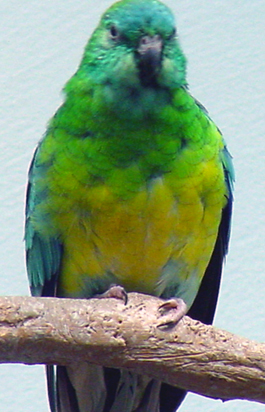
Common Name: Red-Rumped Parrot
Scientific Name: Psephotus haematonotus
Classification Information
Kingdom: Animal
Phylum: Chordata
Class: Aves
Order: Psittaciformes
Family: Psittacidae
Genus: Psephotus
Species: Haematonotus
Geographic Range and Habitat

The Red-rumped Parrot is widely distributed across southeastern Australia.
These parrots prefer wooded grassland and farmland near a permanent water source.
Physical Characteristics
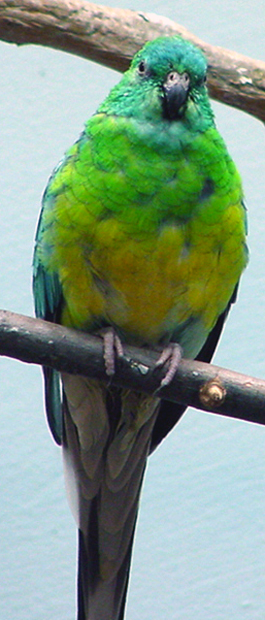
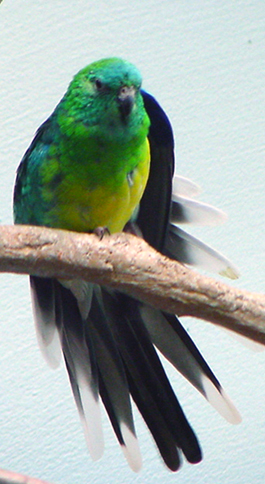
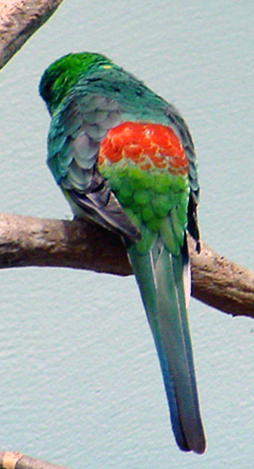
This is a small, plump parrot, about 11 inches tall. It has a long tail. The male of the species is bright green in color, with blue markings on the back and wings and a black beak. The male is the only one with the red rump. The female Red-rumped Parrot is one of the drabbest parrots in Australia. It is a pale olive color with dull yellow neck and breast. The female’s beak is gray. Juveniles are similarly marked as adults, only duller in color.
Habits

The Red-rumped Parrot is very active and social, congregating in sizable groups during foraging and roosting. These groups leave roosting trees at dawn and fly to waterholes or little streams to drink before foraging. When foraging, they are often found with Cloncurry Parrots and various Rosellas. Before sunset, they fly to water holes again to drink before returning to roosting trees. The call of the Red-rumped parrot is more of a quiet ring as opposed to the common parrot shriek. Males perform a courtship display in which he stands in an upright position with nodding head, open wings and spread tail before the female. This is followed by courtship feeding, a common characteristic of parrots.
Diet
Their diet consists of grass seeds and some plant material.
Reproduction
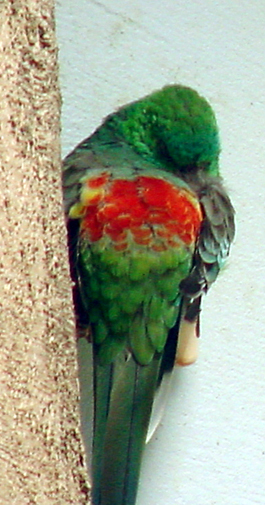
Sexual maturity is reached after one year. Breeding takes place from August to January and is preceded by the courtship display. A tree hollow close to the ground and lined with wood dust is the usual nesting site for the clutch of 4-6 eggs. The female Red-rumped Parrot incubates the eggs for approximately 20 days, during which the male regularly feeds and attends to her. Both parents participate in the rearing of the young.
Natural History
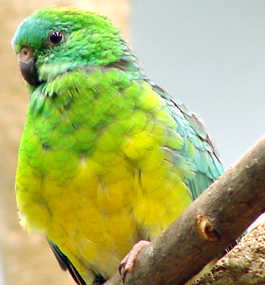
The Red-rumped Parrot is one of the few animals that has benefited by the encroachment of man. Extensive tree clearing has made these grass seed eaters more common in areas where they were once rare.
Captive History
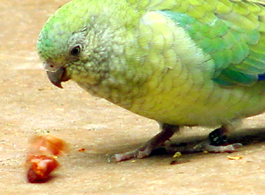
Red-rumped Parrots do very well in captivity. Their gregarious nature can make them over-whelming to other bird species.
Conservation

Status of this species is difficult to determine due to conflicting opinions. It is not listed as a threatened or endangered species, and has benefited by being able to forage on land newly stripped of trees. However, competition from other species has driven them from most common areas of feeding
Did You Know?
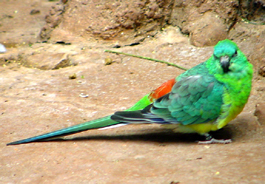
The Male Red-rumped Parrot has been documented feeding the nesting female on an almost hourly basis.
Author
Description
 As the third oldest zoo in the United States, the Buffalo Zoo houses some of the world's most exotic and endangered wildlife. In collaboration with the Center for Applied Technologies in Education, the Buffalo Zoo has provided these animal profiles to offer a glimpse into the diversity of the Zoo’s collection.